

Key Takeaways
When donors specify exactly how their contributions should be used, nonprofits take on legal obligations that are enforced under state law, by the terms of each gift or grant, and by their own auditors. Understanding the critical differences between restricted and unrestricted funds that nonprofit organizations must manage isn’t just about compliance—it’s about maintaining donor trust and ensuring long-term financial sustainability.
Whether you’re managing a small community organization or overseeing finances for a large charitable foundation, proper fund classification affects everything from daily operations to annual reporting. In our 23+ years of helping nonprofits navigate these waters, we’ve seen organizations thrive when they master fund restrictions—and struggle significantly when they don’t. This guide will walk you through the essential distinctions, compliance requirements, and best practices that keep your organization both legally compliant and financially healthy.
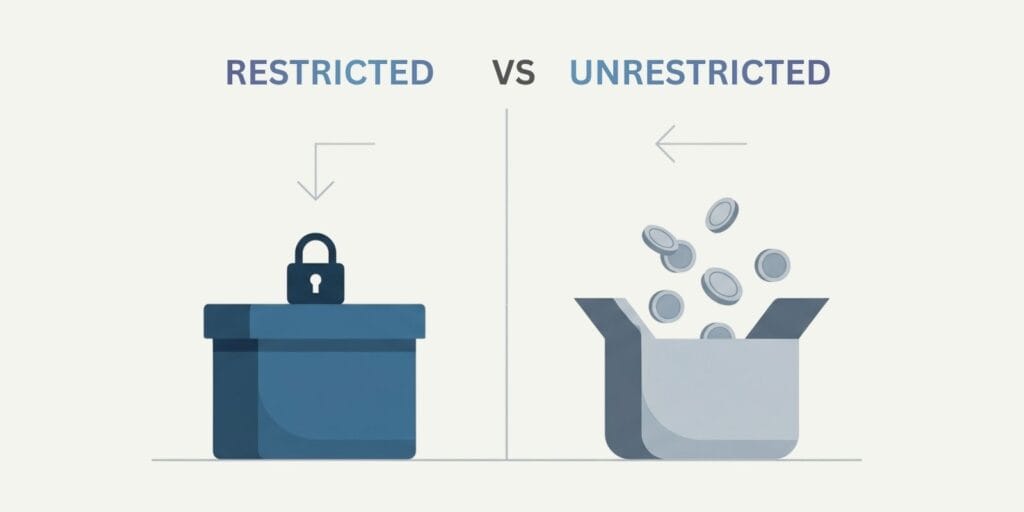
Unrestricted funds represent net assets without donor restrictions—essentially, money your organization can use the board however it determines best serves your mission. These funds provide the operational flexibility that keeps nonprofits running day-to-day. Under FASB ASU 2016-14 guidelines, unrestricted funds are classified as “net assets without donor restrictions” on your financial statements.
Think of unrestricted funds like cash in your personal checking account—you can pay rent, buy groceries, or save for vacation. The donor has made their contribution and trusts your organization to use it wisely. Common sources include individual donations without specific designations, membership fees, fundraising event proceeds, and earned revenue from programs or services.
An organization that receives a large share of its funding as unrestricted gifts can respond quickly when programs shift or unexpected opportunities arise. Upgrading a database system mid-year, for example, becomes possible without requesting special permission from donors.
Our nonprofit bookkeeping services help organizations properly track and maximize the impact of these flexible funding sources.
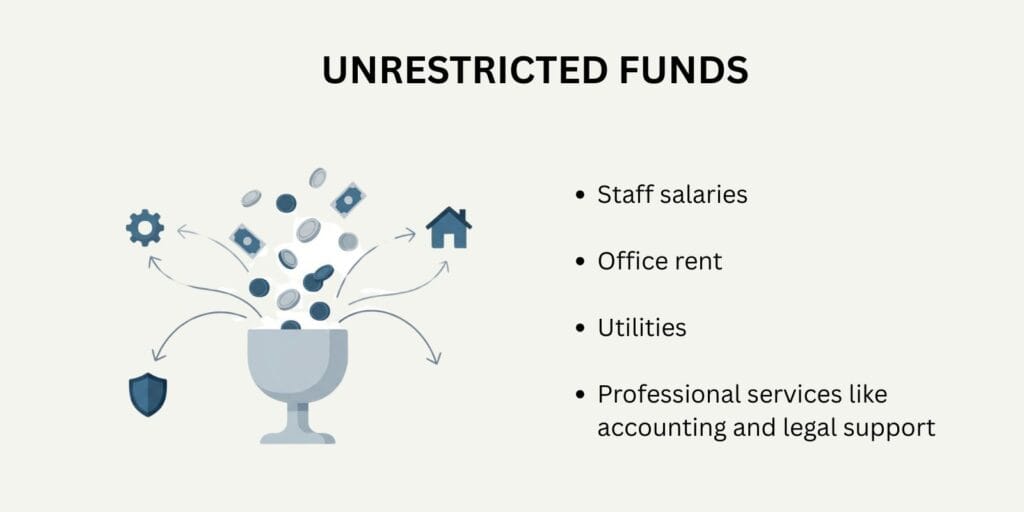
Administrative expenses often consume the largest portion of unrestricted funds. Staff salaries, office rent, utilities, insurance, and professional services like accounting and legal support typically come from this bucket. Many donors prefer funding direct services, making unrestricted gifts particularly valuable for covering these essential but less glamorous costs.
Emergency reserves represent another critical use. We recommend nonprofits maintain 3-6 months of operating expenses in unrestricted reserves. During the pandemic, organizations with adequate reserves survived while others faced difficult closure decisions. These funds also support strategic initiatives—board retreats, staff development, technology upgrades, and capacity-building investments that strengthen your organization’s long-term effectiveness.
Smart nonprofits also use unrestricted funds to leverage restricted gifts. If a foundation awards a program grant but doesn’t cover administrative costs, unrestricted funds can fill that gap, ensuring programs receive proper oversight and support.
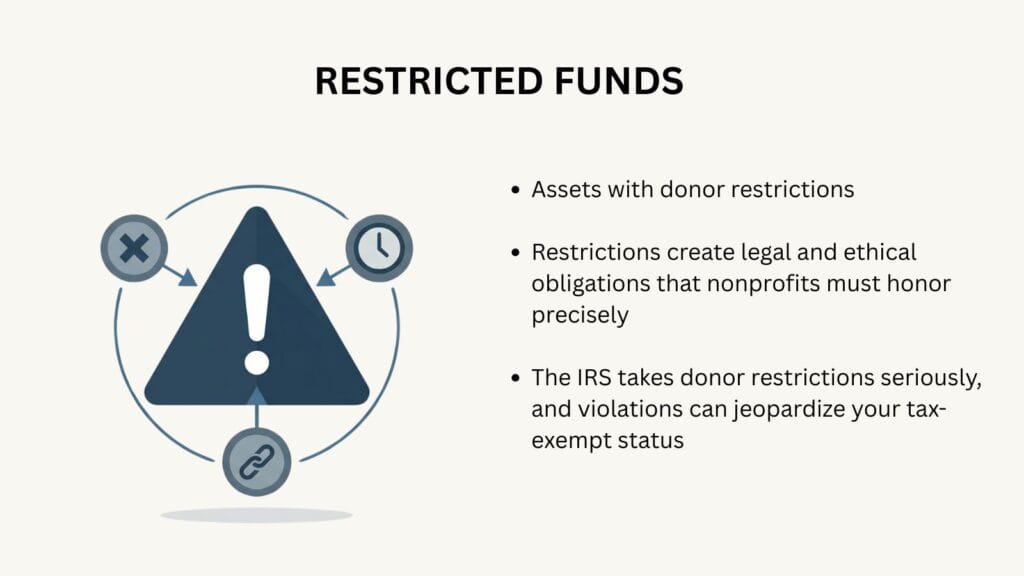
Restricted funds are net assets with donor restrictions—contributions that come with specific instructions about how the money must be used. These restrictions create legal and ethical obligations that nonprofits must honor precisely. Those obligations are enforced mainly under state law. Laws such as California’s version of the Uniform Prudent Management of Institutional Funds Act allow a restriction to be released or changed with the donor’s consent in writing, or by a court, with notice to the attorney general.
When a donor writes “for after-school tutoring only” on their check, they’ve created a restricted fund. Your organization becomes a steward of that money, legally bound to use it exactly as specified. Treating restricted funds as unrestricted can lead to audit findings, repayment of grant funds, donor disputes, and state attorney general investigations.
The key principle is donor intent. Courts consistently rule that nonprofits must honor the donor’s wishes, even when organizational needs suggest different uses might be more effective. This creates both opportunities and challenges for nonprofit management.
Must be spent on a specific program, project, or mission area.
e.g., $10K for homeless shelter operations
Cannot be used until specific time periods or events occur.
e.g., $25K for 2026 summer camp
Principal preserved forever; only investment earnings may be spent.
e.g., True endowment fund
Restrictions expire when purpose is fulfilled or time condition met.
e.g., Multi-year pledge
Purpose-restricted funds must be used for specific programs, projects, or activities. A $10,000 grant “for homeless shelter operations” or “to purchase medical equipment” creates purpose restrictions. These funds remain restricted until used for their designated purpose, then they’re released from restriction.
Time-restricted funds cannot be used until specific time periods or events occur. Endowment funds represent permanent restrictions—only investment earnings can be used, never the principal. Pledge payments due in future years create temporary time restrictions until the payments are received.
Under current FASB standards, we classify restrictions as either temporary or permanent. Temporary restrictions expire when the purpose or time conditions are met. Permanent restrictions, like true endowments, never expire. Understanding these classifications is crucial for proper financial reporting and compliance.
An organization can easily end up tracking a dozen or more restricted funds at once — some for specific programs, others for facility improvements, several time-restricted grants with multi-year spending requirements. Proper tracking systems become essential when restrictions multiply.
Net assets without donor restrictions
Net assets with donor restrictions
The fundamental difference lies in decision-making authority. With unrestricted funds, your board has complete discretion over usage, subject only to IRS requirements that expenditures further your exempt purposes. Board members can vote to reallocate unrestricted funds between programs, build reserves, or invest in new initiatives.
Restricted funds eliminate this flexibility. Donor restrictions supersede board preferences. If a donor specifies funds for youth programming, the board cannot redirect that money to senior services, regardless of changing community needs. We’ve helped organizations navigate situations where restricted funds accumulated for programs that were no longer viable, requiring careful donor communication to modify restrictions.
Cash flow management becomes more complex with restricted funds. You might have $50,000 in the bank, but be unable to pay rent if those funds are restricted for specific programs not yet implemented. This cash-rich but cash-poor situation affects many nonprofits with significant restricted funding. I call it the “nonprofit paradox”—plenty of money, but none you can actually use when the electric bill arrives.
Documentation requirements also differ dramatically. Unrestricted funds require basic accounting records, while restricted funds demand detailed tracking of donor intent, expenditure authorization, and restriction satisfaction. Every transaction must be documented and justified.
On your Statement of Financial Position, restricted and unrestricted funds appear separately as “net assets with donor restrictions” and “net assets without donor restrictions.” This presentation helps board members, donors, and auditors understand your organization’s financial flexibility.
The Statement of Activities shows how restrictions are satisfied during the year. When you spend restricted funds for their intended purposes, they appear as “net assets released from restrictions” and transfer to the unrestricted column. This reporting demonstrates compliance with donor intent and helps stakeholders understand fund flows.
Note disclosures must detail significant restrictions, including their nature, purpose, and any limitations on timing. Auditors pay particular attention to these disclosures, ensuring your organization properly communicates its stewardship responsibilities to financial statement users. For help preparing compliant financial statements, check out our guide to nonprofit financial statements.
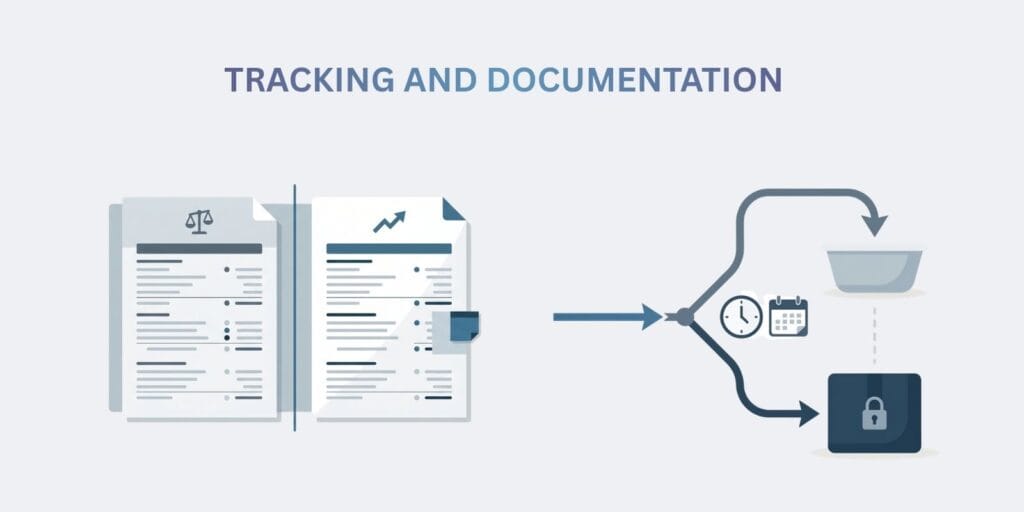
Effective fund restriction management starts with robust accounting systems. QuickBooks Online, our recommended platform for most clients, includes fund tracking features that segregate restricted and unrestricted assets. Every transaction should be coded with the appropriate fund designation from the moment funds are received.
We recommend creating a restriction register—a detailed spreadsheet or database tracking each restricted gift’s donor, amount, purpose, time limitations, and spending progress. This register becomes your compliance bible, ensuring no restrictions are overlooked or violated. Trust me, when audit season arrives, you’ll thank yourself for maintaining this documentation.
Documentation protocols must capture donor intent precisely. Grant agreements, donor letters, and gift acknowledgments should specify restrictions clearly. When donors give verbal instructions, follow up with written confirmation to avoid future disputes. We’ve seen relationships deteriorate when organizations and donors remember restrictions differently.
Monthly reconciliation becomes critical with mixed funding sources. Bank statements don’t distinguish between restricted and unrestricted cash—your internal controls must maintain those distinctions accurately. Regular variance reports help identify potential compliance issues before they become serious problems.
Board members bear fiduciary responsibility for proper fund management, including restriction compliance. We recommend quarterly reports showing restricted fund balances, recent activity, and any compliance concerns. Board members should understand major restrictions affecting organizational operations.
Written policies should govern restriction management, including authorization procedures for spending restricted funds, documentation requirements, and steps to take when restrictions cannot be fulfilled. These policies protect both the organization and individual board members from liability.
Regular training helps board and staff understand their legal obligations. New board members should receive restriction management orientation, and annual refreshers keep everyone current on compliance requirements. The small investment in education pays huge dividends in avoiding problems.
Using restricted program funds to pay admin overhead not covered by restriction.
Spending restricted funds before or after authorized time periods.
Poor tracking creates audit presumptions of violations.
Triggers audit findings, grant repayment, state AG investigations.
Not forecasting restriction timing creates operational crisis.
Silent struggling instead of early discussion compounds issues.
The most common mistake we see is commingling restricted and unrestricted funds in shared expense categories. When organizations use restricted program funds to pay for administrative overhead not covered by the restriction, they violate donor intent. Clear cost allocation policies prevent these errors.
Timing violations occur when organizations spend restricted funds before meeting time requirements or use temporarily restricted funds after their deadlines expire. A $25,000 grant for “2026 summer camp programs” cannot fund fall activities, even if the organization runs similar programs year-round.
Inadequate documentation creates enforcement vulnerabilities. State attorneys general investigating nonprofit compliance look for restriction tracking records. Organizations with poor documentation face presumptions that violations occurred, shifting the burden of proof to the nonprofit. The National Council of Nonprofits provides excellent guidance on maintaining proper documentation.
If violations occur, immediate action is crucial. Stop the improper spending, assess the scope of the problem, and develop corrective action plans. Depending on the situation, you might need to reimburse restricted funds from unrestricted sources or seek donor permission to modify restrictions retroactively.
Managing cash flow with mixed funding requires careful planning and often creative solutions. We help clients develop cash flow projections that account for restriction timing and spending requirements. This forecasting identifies potential shortfalls before they create operational problems.
Interfund borrowing can provide temporary relief when cash flow timing creates difficulties. If your organization has adequate unrestricted reserves, you can “loan” money to cover expenses that will eventually be reimbursed with restricted funds. Written interfund loan agreements document these transactions and ensure prompt repayment.
Building unrestricted reserves becomes even more critical for organizations with significant restricted funding. These reserves provide the flexibility to manage timing differences and respond to unexpected needs. We typically recommend higher reserve targets for nonprofits heavily dependent on restricted gifts.
Donor reporting schedules should align with your cash flow planning. Understanding when donors expect progress reports and final expenditure documentation helps you plan restricted fund spending to meet those deadlines while maintaining adequate documentation.
Under ASU 2016-14, implemented in 2018, nonprofit financial statements present net assets in two categories: with donor restrictions and without donor restrictions. This simplified presentation replaced the previous three-category system but requires more detailed note disclosures about restriction types and purposes.
Your Statement of Activities must show releases from restriction as a separate line item when restricted funds are spent for their intended purposes. This presentation demonstrates compliance and helps readers understand how restrictions affect operations. The net effect shows zero impact on total net assets but clarifies fund flows between categories.
Liquidity disclosures, now required for all nonprofits, must address how restrictions affect available resources. Organizations must explain which assets are available for general expenditures within one year, considering both legal restrictions and board designations. If you’re preparing for your annual filing, our Form 990 preparation services ensure proper reporting of restricted funds.
Transparent donor reporting builds trust and encourages future giving. Restricted fund reports should show beginning balances, new contributions, expenditures, and ending balances for each major restriction category. Including narrative descriptions of how funds were used makes these reports more engaging and informative.
Regular communication prevents misunderstandings about restriction compliance. We recommend quarterly updates for major donors and annual comprehensive reports for all restricted fund contributors. This proactive approach demonstrates good stewardship and often leads to additional support.
When restrictions cannot be fulfilled as originally intended, honest communication with donors is essential. Most donors prefer organizations that identify problems early and propose solutions rather than those that struggle silently with compliance issues. I’ve found that donors appreciate transparency—they’re usually more understanding than organizations fear.
While restricted gifts often seem more attractive to donors and easier to secure, organizational health requires a balanced funding portfolio. We typically recommend that mature nonprofits derive at least 40% of their revenue from unrestricted sources to maintain adequate operational flexibility.
Educating donors about organizational needs helps encourage unrestricted giving. Many donors restrict gifts because they don’t understand operational costs or worry about administrative efficiency. Transparent communication about your organization’s full range of needs can shift donor perspectives.
Strategic fundraising campaigns can emphasize unrestricted support. Annual giving programs, major gift initiatives focused on general operating support, and board member contributions typically generate unrestricted revenue. These campaigns require different messaging but often yield more valuable support.
Corporate sponsors and foundation funders increasingly understand the importance of general operating support. The pandemic highlighted how organizations with flexible funding survived better than those dependent entirely on program-specific grants. Use this awareness to advocate for unrestricted support.
Building adequate operating reserves requires dedicated effort when most funding comes with restrictions. Board-designated endowments, reserve funds, and planned giving programs help create unrestricted assets that support long-term sustainability. These funds provide stability during economic downturns and enable strategic investments in organizational growth.
Planning for restricted fund spending timelines affects both program development and financial management. Multi-year grants require careful expenditure pacing to meet both programmatic goals and compliance deadlines. We help clients develop spending plans that optimize program impact while satisfying donor requirements.
Creating diversified funding portfolios reduces dependence on any single revenue source or restriction type. Organizations with mixed funding—individual donors, foundation grants, government contracts, and earned revenue—weather challenges better than those dependent on single sources. If you’re looking to develop a more strategic approach to fund management, contact our team for personalized guidance.
If tracking restricted and unrestricted funds is taking over the month: GivingArc’s monthly bookkeeping, $300 to $1,950 per month by volume, includes fund and restricted-grant tracking and a one-page board report. See the pricing page and how we work.
Only through formal donor consent or court modification. Restrictions are legally binding; nonprofits cannot unilaterally convert restricted to unrestricted without proper authorization.
Contact the donor immediately to discuss alternatives. Options include modifying the restriction, returning the funds, or redirecting to similar purposes with donor approval. Silent non-compliance can trigger legal action.
Track each portion separately from day one. For example, a $100,000 grant with $75,000 for programs and $25,000 for administration requires dual fund tracking with distinct expenditure documentation for each restriction.
Financial experts recommend at least 40% unrestricted funding for optimal flexibility. Organizations with 60%+ unrestricted funds are better positioned to weather economic shifts and invest in strategic priorities.
Report as “Net Assets Released from Restrictions” on your Statement of Activities when restriction conditions are satisfied. This line item shows the transition from restricted to unrestricted classification.
Expect audit findings, extended fieldwork, and management letter deficiencies. Serious violations can lead to repayment of grant funds, donor disputes, and state attorney general investigations into fund mismanagement.
Successfully managing restricted vs unrestricted funds that nonprofit organizations receive requires ongoing attention to detail, robust systems, and strategic thinking about funding portfolio balance. The distinction affects every aspect of nonprofit operations—from daily financial decisions to long-term strategic planning.
Organizations that master fund restriction management gain competitive advantages in donor stewardship, operational flexibility, and financial stability. Those who struggle with compliance face ongoing stress, limited effectiveness, and potential legal consequences that can threaten their mission.
The complexity of modern nonprofit funding makes professional accounting support increasingly valuable. With changing regulations, increasingly sophisticated donor requirements, and growing compliance expectations, many organizations find that expert guidance pays for itself through improved efficiency and reduced risk.
Whether you’re establishing initial fund tracking systems, preparing for your first major restricted gift, or seeking to optimize existing processes, proper professional support can help you navigate these requirements successfully. Getting this right from the start saves enormous headaches down the road. Our team brings over two decades of nonprofit accounting experience to help organizations thrive while maintaining full compliance with all restriction requirements. Contact our team today to discuss how we can support your organization’s financial management and compliance goals through our comprehensive nonprofit accounting services.