
Key Takeaways
Managing cash flow effectively can mean the difference between a thriving nonprofit that consistently delivers on its mission and one that struggles to keep its doors open. Unlike for-profit businesses that can rely on steady sales revenue, nonprofits face unique challenges including irregular grant disbursements, seasonal giving patterns, and restricted funding that limits financial flexibility. With over 23 years of nonprofit accounting experience, our team has seen firsthand how proper nonprofit cash flow management transforms operational stability and mission impact.
Excel template with automatic Days of Cash, Coverage Ratio, and Burn Rate calculations. 9 revenue + 11 expense categories pre-built.
The reality is stark: according to National Council of Nonprofits research, cash flow problems are among the top reasons why nonprofits fail or significantly reduce their programs. However, with the right strategies and systems in place, your organization can build financial resilience that supports sustained growth and impact throughout 2026 and beyond.

Cash flow management for nonprofits refers to the strategic planning, monitoring, and optimization of money moving in and out of your organization to ensure you can meet operational needs when they arise. This goes far beyond simple budgeting—it’s about understanding the timing of your income and expenses to prevent shortfalls that could disrupt programs or services.
The distinction between having adequate funding on paper and having accessible cash when needed is crucial. A nonprofit might show strong financial health on its statement of financial position, yet struggle to pay staff or vendors if funds are restricted or tied up in long-term commitments. This timing mismatch between revenue recognition and actual cash availability creates the cash flow challenges that keep nonprofit leaders awake at night.
According to IRS data, organizations with poor cash flow management face a higher risk of compliance issues, including late Form 990 filings and employment tax problems. These issues compound quickly, creating a cycle where financial stress leads to operational problems that further strain cash resources.
Poor cash flow management directly impacts mission delivery in several ways: delayed program launches, reduced service capacity, difficulty attracting and retaining qualified staff, and decreased donor confidence. When board members and key stakeholders lose trust in financial management, fundraising becomes significantly more challenging, creating a downward spiral that’s difficult to reverse.
Organizations that prioritize professional bookkeeping and accounting frequently discover hidden opportunities—like matching grant challenges or emergency response needs—that require quick financial decisions and immediate funding access.
Nonprofit revenue patterns differ dramatically from traditional business models, creating predictable yet challenging cash flow cycles. Most organizations experience significant revenue concentration during the fourth quarter, with December alone often representing 30-40% of annual individual giving according to Candid research.
Grant disbursements create additional timing challenges. Federal grants often require organizations to spend money upfront and request reimbursement later, sometimes with 30-90 day processing delays. Foundation grants may arrive in annual lump sums that must fund twelve months of operations, requiring careful allocation and reserve management.
Consider a scenario where a nonprofit receives a $120,000 foundation grant in January to fund a year-long program. Without proper planning, this might create a false sense of financial security in the first quarter, followed by increasing pressure as the year progresses and other funding sources fail to materialize as expected.
Summer months typically bring the greatest cash flow stress, as individual giving drops significantly while program demands often increase. Summer camps, back-to-school programs, and increased service needs for vulnerable populations all require funding during the year’s most challenging fundraising period.
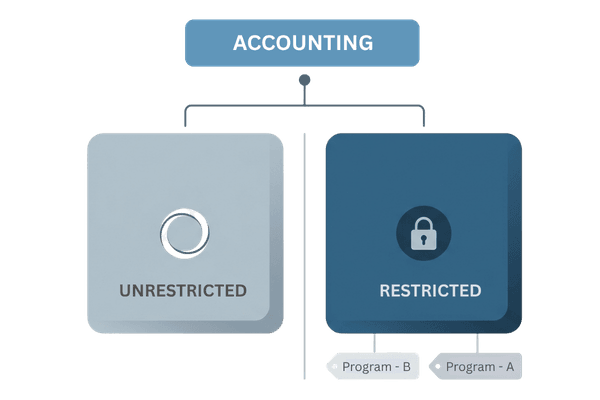
Fund restrictions create complex cash flow scenarios that require sophisticated tracking and planning. When donors restrict gifts for specific purposes or time periods, organizations must maintain adequate unrestricted funds for general operations, even when total cash appears sufficient.
Watch: why total cash can look sufficient while restricted money is already spoken for (video).
Understanding fund accounting basics is essential here. For example, a nonprofit might have $50,000 in the bank but only $5,000 available for payroll if the remainder consists of restricted grants for future program periods. In our experience, this scenario represents a weekly reality for many organizations we encounter.
Board-designated funds add another layer of complexity. While technically unrestricted under FASB standards, these funds represent board commitments that shouldn’t be used for general operations without careful consideration and formal board action.
Multi-year pledges and grants create timing challenges where revenue recognition doesn’t match cash receipt. A three-year, $300,000 grant might be recognized as $100,000 annually for financial statement purposes, but actual cash might arrive in uneven installments that don’t align with operational needs. Managing restricted vs unrestricted funds effectively requires both technical expertise and strategic planning.
Effective cash flow forecasting starts with detailed monthly projections that account for both predictable patterns and potential variables. Unlike annual budgets that focus on program goals and outcomes, cash flow forecasts must reflect the actual timing of receipts and disbursements.
The foundation of accurate forecasting lies in analyzing historical data to identify patterns. Review at least three years of bank statements to understand seasonal trends, average gift sizes, and typical collection periods for different revenue sources. This analysis reveals patterns that might not be obvious from program reports or development summaries.
Grant payment schedules require particular attention. Create a comprehensive grants calendar that tracks not just award amounts and periods, but also reporting requirements, reimbursement procedures, and historical payment timing from each funder. Some foundations consistently pay within 30 days of invoice submission, while others may take 90+ days even after formal approval.
Weekly cash flow monitoring becomes essential during tight periods or major transitions. Organizations implementing professional bookkeeping practices often include weekly flash reports when facing cash constraints, allowing for immediate action when variances occur.
Scenario planning strengthens forecasting accuracy by preparing for multiple outcomes. Create best-case, worst-case, and most-likely scenarios for major revenue sources, particularly grants under review or major donor prospects in cultivation. This approach prevents over-optimism while maintaining realistic planning targets.
Unrestricted Cash ÷ Avg Daily Expenses
Target
60 – 90 days
Unrestricted Net Assets ÷ Monthly Expenses
Target
3 – 6 months
Cash Flow ÷ Debt + Fixed Costs
Minimum
> 1.0
Monthly Cash Used ÷ Total Available
Review
Weekly
Days of cash on hand represents the most critical cash flow metric for nonprofits. Calculate this by dividing available unrestricted cash by average daily operating expenses. Most financial experts recommend maintaining 60-90 days of cash on hand, though the appropriate level depends on revenue stability and access to emergency funding.
The cash flow coverage ratio measures your organization’s ability to meet obligations from operational cash flow. Calculate this by dividing cash flow from operations by total debt service and essential fixed costs. A ratio below 1.0 indicates potential problems meeting basic obligations—requiring immediate attention and action planning.
Working capital analysis reveals the relationship between current assets and liabilities, highlighting potential cash availability issues even when overall financial position appears strong. This becomes particularly important when managing restricted funds and multi-year commitments.
Burn rate analysis tracks how quickly your organization uses cash during different periods, helping identify seasonal patterns and efficiency opportunities. Calculate monthly burn rates for both restricted and unrestricted funds to understand true cash consumption patterns.
These metrics should be calculated monthly and presented to board members through clear, visual dashboards that highlight trends and flag potential issues before they become crises. Regular monitoring allows for proactive adjustments rather than reactive crisis management.
Spread income across 5+ sources; no single funder over 40%.
Retention costs 5–7× less than acquiring new donors.
Purchase approvals + departmental spending guidelines.
Negotiate 45-day terms, capture 2% early-pay discounts.
Auto-transfer 5–10% of unrestricted revenue monthly.
Pre-arrange credit backup before you need it.
QuickBooks Online + automated reconciliation + invoicing.
Expert bookkeeping to build sustainable systems.
Building multiple revenue streams reduces dependence on any single funding source and creates more predictable cash flow patterns. Successful diversification typically includes individual giving, foundation grants, government funding, earned revenue, and special events, with no single source representing more than 40% of total revenue.
Monthly giving programs provide the most reliable cash flow foundation for most nonprofits. Monthly donors give 42% more annually than one-time donors and provide predictable revenue that supports consistent operations. Implementing automatic recurring donations through modern payment processors creates steady income streams that improve cash flow forecasting accuracy.
Donor retention strategies directly impact cash flow stability. It costs 5-7x less to retain existing donors than acquire new ones, and long-term donors typically increase their giving over time. Focus on donor stewardship that builds relationships and demonstrates impact, leading to increased giving frequency and amounts.
Corporate partnerships can provide both funding and in-kind support that reduces cash expenses. Employee giving programs, matching gift opportunities, and corporate volunteer programs create multiple touchpoints that strengthen relationships and increase overall support levels.
Get a free custom quote tailored to your organization — no obligation.
Strategic expense timing helps smooth cash flow fluctuations throughout the year. Major purchases, equipment replacements, and non-essential expenses should be scheduled during periods of strong cash availability, typically following major fundraising campaigns or grant disbursements.
Negotiating favorable payment terms with vendors improves cash flow flexibility without reducing program effectiveness. Request 45-day payment terms instead of immediate payment, particularly for large purchases or ongoing services. Some vendors offer 2% early payment discounts that can benefit organizations during cash-rich periods while maintaining flexibility when funds are tight.
Implementing purchase approval processes prevents unauthorized spending that can disrupt cash flow planning. Establish clear spending thresholds requiring management approval, and ensure all departments understand the importance of adhering to cash flow timing requirements.
Operating reserves provide essential protection against cash flow disruptions and unexpected expenses. Financial experts recommend maintaining reserves equal to 3-6 months of operating expenses, though smaller organizations might start with a more modest goal of 30-60 days.
Building reserves requires discipline and board commitment. Consider establishing a board-designated reserve fund with clear policies governing contributions and withdrawals. Automatic transfers of 5-10% of unrestricted revenue to reserves creates consistent growth without requiring constant decision-making.
Line of credit arrangements provide additional cash flow flexibility for organizations with established banking relationships. While interest costs make credit lines less attractive than reserves, having approved credit available prevents crisis situations when major grants are delayed or unexpected expenses arise.
Modern accounting software dramatically improves cash flow visibility and management capabilities. Cloud-based solutions like QuickBooks Online provide real-time cash position monitoring, automated bank reconciliation, and customizable cash flow reports that support better decision-making.
Professional nonprofit accounting support ensures accurate financial tracking and reporting while freeing leadership to focus on mission delivery. Experienced nonprofit accountants understand the unique challenges organizations face and can provide strategic guidance beyond basic bookkeeping.
Automated billing and collection systems reduce administrative burden while improving cash flow timing. Electronic invoicing for grant reimbursements, automated pledge reminders, and online donation processing all contribute to faster cash collection and reduced processing costs.

Start by conducting a comprehensive cash flow assessment of your current situation. Review bank statements, identify seasonal patterns, and calculate key metrics like days of cash on hand and burn rate. This baseline assessment reveals immediate priorities and improvement opportunities.
Develop monthly cash flow projections for the next 12 months, incorporating known grants, pledges, and recurring expenses. Include contingency planning for major variables like pending grant decisions or potential emergency expenses. Update projections monthly based on actual results and new information.
Establish monitoring systems that provide early warning of potential problems. Weekly cash position reports during tight periods, monthly metric calculations, and quarterly board reviews create accountability and enable proactive management.
Set specific, measurable goals for cash flow improvement. Examples might include: increasing days of cash on hand from 30 to 60 within 12 months, reducing grant reimbursement collection time by 15 days, or building monthly giving to represent 20% of individual donations.
Over-reliance on single funding sources creates dangerous vulnerabilities when grants end or major donors change priorities. We’ve seen organizations forced to eliminate entire programs when a single foundation shifts focus. Diversification takes time but provides essential protection.
Inadequate tracking of restricted funds leads to compliance violations and donor trust issues. Implement fund accounting systems that clearly separate restricted and unrestricted resources, preventing accidental misuse of designated funds.
Optimistic revenue projections without contingency planning set organizations up for crisis. Base projections on conservative estimates and historical collection patterns rather than best-case scenarios. Include probability factors for uncertain revenue sources.
Delayed invoicing and collection efforts directly impact cash availability. Establish standard procedures for grant invoicing, pledge collection, and follow-up communications. Every day of delay in invoicing translates to delayed cash receipt.
Your monthly close, reconciliations, fund tracking, and board-ready financial reports — no obligation.
Effective nonprofit cash flow management requires ongoing attention, strategic planning, and professional expertise. The strategies outlined here provide a roadmap for building financial stability that supports sustainable mission delivery.
Remember that improving cash flow management is a gradual process—start with one or two strategies and build momentum over time. Focus first on understanding your current position through accurate tracking and reporting, then implement improvements based on your organization’s specific needs and capabilities.
If managing cash flow while delivering programs feels overwhelming, you’re not alone. Many nonprofit leaders struggle to balance financial management with mission focus. Professional accounting support can provide the expertise and systems needed to optimize cash flow while you concentrate on serving your community.
Ready to strengthen your organization’s financial foundation? Contact GivingArc to discuss how our nonprofit accounting expertise can help you build sustainable cash flow management systems. With the right partner and proven strategies, your organization can achieve the financial stability needed to maximize mission impact throughout 2026 and beyond.
Common questions about nonprofit cash flow management answered by GivingArc CPAs.