

Key Takeaways
Last updated: April 2026. This article reflects the latest IRS guidelines and nonprofit accounting standards for 2026.
The IRS revokes tax-exempt status for approximately 1,000 nonprofits annually due to compliance failures, with inadequate record-keeping being one of the leading causes. For 501(c)(3) organizations, proper bookkeeping isn’t just about financial management—it’s about maintaining the trust of donors, meeting legal obligations, and preserving your tax-exempt status. Unlike general business accounting, 501(c)(3) bookkeeping requirements include specific documentation standards, fund accounting principles, and public accountability measures that can make or break your organization’s compliance standing.
The consequences of overlooking these requirements are serious, ranging from IRS penalties to complete loss of exempt status. This comprehensive guide will walk you through every essential aspect of the 501(c)(3) bookkeeping requirements for 2026, ensuring your organization stays compliant while staying focused on your mission. Whether you’re a new nonprofit or looking to strengthen your existing practices, understanding these requirements is crucial for long-term success. For organizations needing professional guidance, our nonprofit bookkeeping services provide the expertise needed to navigate these complex requirements.
The fundamental difference between 501(c)(3) bookkeeping and standard business accounting lies in the unique obligations that come with tax-exempt status. Your organization operates under a social contract that requires demonstrating how every dollar serves your charitable purpose. This means maintaining detailed records that show not just what you spent, but how those expenditures advance your mission.
Tax-exempt status brings heightened scrutiny from the IRS, state regulators, and the public. We’ve worked with clients who learned this the hard way—one community arts center in Nevada faced a comprehensive IRS examination because they couldn’t properly document how their program expenses differed from administrative costs. The IRS exemption requirements make it clear that organizations must be prepared to justify their tax-exempt status at any time.
Public accountability represents another critical distinction. Unlike private businesses, 501(c)(3) organizations must make their financial information available for public inspection. This transparency requirement means your bookkeeping practices will eventually face external review, making accuracy and completeness non-negotiable. I always tell new clients: “Think of your books as tomorrow’s front-page news—would you be comfortable with that level of scrutiny?”
Proper 501(c)(3) bookkeeping requires organizing financial records into specific categories that align with IRS reporting requirements. Revenue tracking must distinguish between different income sources: donations, grants, program service fees, investment income, and any unrelated business income. Each category carries different compliance obligations and reporting requirements.
Expense documentation goes beyond simple categorization. You’ll need to allocate costs between program services, management and general expenses, and fundraising activities. This allocation directly impacts your organization’s efficiency ratios and can influence donor confidence and grant eligibility. Our experience shows that organizations with clear expense allocation systems from day one avoid the painful process of reconstructing financial data during Form 990 preparation.
Net asset classifications under current FASB accounting standards require tracking funds with donor restrictions separately from unrestricted funds. This distinction affects everything from cash flow planning to compliance reporting, making proper classification essential for accurate financial reporting.
Every dollar that enters your organization requires appropriate documentation, but the level of detail varies significantly by income type. Donation receipts must meet specific IRS requirements for tax-deductible contributions, including proper acknowledgment language and timely issuance. For donations over $250, written acknowledgments become mandatory, and gifts of $75 or more that provide benefits to donors require specific disclosure language about the value of goods or services provided.
Grant agreements deserve special attention in your documentation system. We’ve seen organizations lose funding because they couldn’t produce required financial reports due to inadequate record-keeping during the grant period. Each grant should have its own file containing the original agreement, all correspondence, progress reports, and detailed expense tracking that matches the grant’s budget categories. One client learned this lesson after scrambling to recreate six months of program expenses when their funder requested an unexpected mid-year audit.
Program service revenue, whether from fees, sales, or contracts, requires documentation that clearly shows the charitable purpose being served. The IRS guidelines for maintaining tax-exempt status emphasize that revenue-generating activities must further your exempt purpose or qualify as unrelated business income subject to taxation.
Investment income documentation should include brokerage statements, dividend notices, and records of any investment sales. For organizations with significant investment portfolios, maintaining records that support the charitable nature of investment activities becomes crucial for compliance reviews. Trust me, trying to reconstruct three years of investment transactions during an audit is not how anyone wants to spend their summer.
The IRS expects supporting documentation for every expense, regardless of size. This includes canceled checks, invoices, receipts, contracts, and any agreements that authorize expenditures. The risk is concrete: in an IRS examination, missing invoices for even small office supply purchases can lead an examiner to question whether those expenses served charitable purposes at all.
Payroll records require particular attention, given their complexity and the IRS’s focus on compensation practices. You must maintain detailed records of all employee wages, benefits, payroll tax withholdings, and any fringe benefits provided. Executive compensation documentation becomes especially critical, as the IRS closely scrutinizes whether compensation amounts are reasonable for the services provided.
Program versus administrative expense allocation requires a consistent methodology and clear documentation. The IRS examines these allocations during audits because they directly impact the organization’s reported efficiency ratios on Form 990. Establishing allocation methods early and applying them consistently prevents compliance issues and ensures accurate financial reporting. For detailed guidance on expense categorization, our nonprofit accounting compliance guide provides practical examples and best practices.
The IRS requires 501(c)(3) organizations to maintain financial records for a minimum of seven years from the filing date of the related tax return. However, certain documents require permanent retention, including your Articles of Incorporation, IRS determination letter, bylaws, and all filed Form 990s. These documents establish your organization’s legal foundation and tax-exempt status history.
Employment tax records follow a four-year retention requirement from the tax due date or payment date, whichever is later. But here’s my professional advice: maintain payroll records for at least seven years to align with general record retention practices. It’s much easier to have records and not need them than to explain their absence to an auditor.
The IRS recordkeeping requirements for exempt organizations specify that records must be available for inspection during normal business hours. This accessibility requirement affects how you organize and store both physical and digital records.
Digital record storage offers significant advantages for 501(c)(3) organizations, provided you follow IRS-acceptable methods. Electronic records must be stored in a format that preserves their integrity and remains readable throughout the retention period. Cloud-based storage solutions have become increasingly popular, but organizations must ensure their chosen platform includes appropriate security measures and backup protocols.
Physical document scanning requires establishing procedures that maintain document authenticity and completeness. We recommend implementing a systematic approach that includes quality control checks and proper file naming conventions to ensure documents remain accessible during compliance reviews or audits. One museum client developed a brilliant system: they scan everything immediately upon receipt, then file physical copies by month. Simple, but effective.
Most 501(c)(3) organizations must file an annual information return with the IRS, with the specific form depending on your organization’s gross receipts and total assets. Organizations with gross receipts normally under $50,000 file Form 990-N (e-Postcard), those with gross receipts under $200,000 and assets under $500,000 typically file Form 990-EZ, while larger organizations file the full Form 990.
Electronic filing became mandatory for most organizations in recent years, with Form 990 returns due by the 15th day of the fifth month after your tax year ends. For calendar year organizations, this means May 15, 2026, for the 2025 tax year. Missing this deadline can result in penalties of $20 per day for organizations with gross receipts under $1,129,690 and up to $112 per day for larger organizations (amounts adjusted annually for inflation).
State filing requirements vary significantly by jurisdiction, with many states requiring separate filings or registration renewals. California, for example, requires Form 199 or 199-N filings that often mirror federal requirements but include state-specific information. The Council of Nonprofits provides state-by-state filing guidance that helps organizations navigate these varied requirements. Our Form 990 filing services ensure both federal and state compliance requirements are met accurately and in a timely.
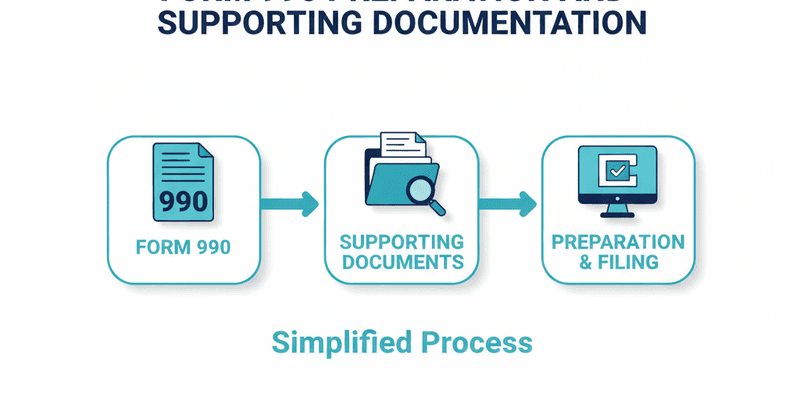
Successful Form 990 preparation begins on January 1st, not in the weeks before the filing deadline. Monthly financial close procedures should include organizing information that will eventually appear on your Form 990, such as program service accomplishments, governance activities, and significant events affecting your organization.
Board meeting documentation throughout the year supports many Form 990 responses, particularly those related to governance practices and policy oversight. Minutes should reflect discussions of compensation decisions, conflict of interest reviews, and financial oversight activities that demonstrate proper governance. I’ve seen too many organizations scramble to “remember” what happened in board meetings from nine months ago—it’s never pretty.
We’ve found that organizations maintaining quarterly “990 prep” files experience much smoother filing processes and fewer compliance issues. These files should include updated program descriptions, board member information, key employee data, and any significant transactions or events that affect your tax-exempt status.
Fund accounting represents one of the most challenging aspects of 501(c)(3) bookkeeping for many organizations. Donor-restricted funds must be tracked separately from unrestricted funds, with clear documentation of the restrictions imposed by donors. These restrictions can be temporary (released when specific conditions are met) or permanent (such as an endowment principal that must be maintained in perpetuity).
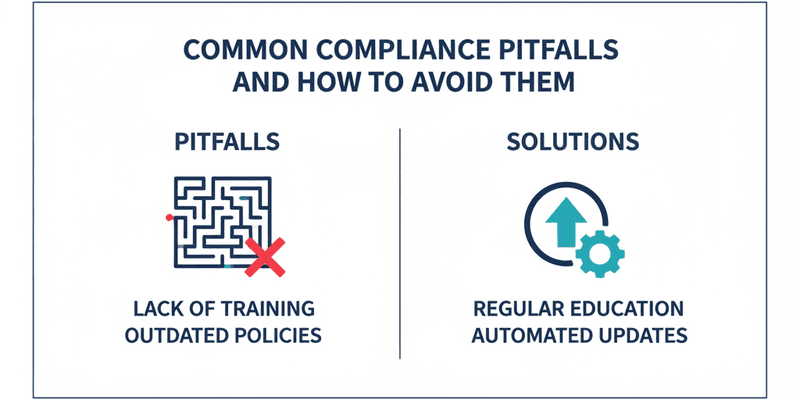
Proper classification starts at the point of gift receipt. Development staff must communicate restriction details to finance personnel, and your bookkeeping system must capture these restrictions in a way that ensures compliance throughout the funds’ use. The donor-relations risk is just as real: using restricted funds for general operations, even inadvertently, takes extensive documentation and donor communication to resolve.
Board-designated funds differ significantly from donor-restricted funds, even though both may be set aside for specific purposes. Board designations can be modified by board action, while donor restrictions typically cannot be changed without donor consent or legal proceedings. This distinction matters greatly for financial reporting under current accounting standards.
Grant-funded activities require meticulous bookkeeping that aligns with each grant’s specific requirements. This includes tracking expenses by the budget categories outlined in grant agreements, maintaining detailed time records for personnel costs, and documenting matching fund requirements where applicable.
Indirect cost allocation becomes particularly important for grants that allow administrative cost recovery. Organizations must establish and consistently apply federally approved indirect cost rates or elect the de minimis rate of up to 15% of modified total direct costs under 2 CFR 200.414(f) (it was 10% before the 2024 revision of the Uniform Guidance). Proper allocation methods must be documented and applied consistently across all grant-funded activities to maintain compliance with federal cost principles.
Effective internal controls protect your organization from financial fraud while supporting accurate bookkeeping practices. Segregation of duties ensures that no single person controls all aspects of any financial transaction. This means separating authorization, recording, and custody functions wherever possible—even in small organizations where this seems impractical.
Check signing procedures should require dual authorization for amounts above board-established thresholds, typically starting at $500 to $1,000, depending on organizational size. Bank reconciliations must be performed by someone other than the person who handles cash receipts or writes checks, with supervisory review documented on the reconciliation. Yes, this can be challenging for small nonprofits, but the alternatives are far worse.
Cash handling protocols become especially important for organizations that receive significant cash donations at events or through collection activities. Establishing procedures for dual counting, immediate deposit preparation, and documented transfer of custody protects both assets and staff members from potential fraud allegations. We helped one youth sports league implement these controls after discovering $15,000 in missing tournament fees—better late than never, but prevention is always preferable.
Board members bear fiduciary responsibility for organizational finances, making their oversight role crucial for compliance. Financial statements should be presented to the board monthly or quarterly, with narrative explanations of significant variances from the budget or unusual transactions.
Executive compensation decisions require particular board attention, as the IRS intermediate sanctions rules impose penalties for excessive compensation payments. Boards must document the basis for compensation decisions, including comparable salary data and performance metrics that justify compensation levels. The IRS guidance on intermediate sanctions provides detailed requirements for these determinations.
Inadequate expense documentation remains the most frequent bookkeeping mistake we encounter. Organizations often maintain receipts but fail to document the business purpose of expenses, particularly for travel, meals, and conference attendance. Every receipt should include a notation of who attended, the business purpose, and how the expense furthers your charitable mission. A sticky note works wonders—just make it a habit.
Mixing personal and organizational expenses creates serious compliance risks, especially for smaller nonprofits where founders or key staff members advance personal funds for organizational purposes. Establishing clear reimbursement procedures and maintaining separate credit cards for organizational use prevents these complications. One arts organization we know faced a nightmare audit when its founder routinely used the nonprofit’s credit card for personal purchases, then reimbursed the organization. Technically legal, but it created a documentation disaster.
Poor donor restriction tracking often emerges as a problem during Form 990 preparation when organizations realize they cannot accurately report restricted fund balances. Implementing restriction tracking from the point of gift receipt, rather than attempting to reconstruct restriction information later, ensures accurate financial reporting and maintains donor trust.
The IRS focuses examination attention on several areas where bookkeeping irregularities often indicate compliance problems. Excessive executive compensation relative to organizational size frequently triggers examinations, particularly when compensation increases dramatically without corresponding organizational growth or performance improvements.
Unrelated business income issues arise when organizations fail to properly identify and report income from activities unrelated to their charitable purpose. Regular review of all income sources helps identify potentially taxable activities before they become compliance problems. That gift shop is selling items unrelated to your mission? It might generate UBIT.
Political activity documentation requires careful attention, as 501(c)(3) organizations face strict limits on lobbying activities and a complete prohibition on political campaign intervention. Maintaining clear records that distinguish between permitted educational activities and prohibited political activities protects your exempt status. For organizations facing compliance challenges, our team provides specialized support to address potential issues before they escalate into serious problems.
Selecting appropriate accounting software significantly impacts your ability to meet 501(c)(3) bookkeeping requirements efficiently. Fund accounting capabilities are essential, allowing you to track restricted and unrestricted funds separately while maintaining consolidated financial reporting. QuickBooks Online’s nonprofit version has become increasingly popular among smaller organizations, while larger nonprofits often require more sophisticated solutions like Sage Intacct or NetSuite.
Integration capabilities with fundraising and donor management systems streamline data entry while reducing errors in gift recording and restriction tracking. The ability to generate Form 990-ready reports saves significant time during tax preparation and ensures consistency between your books and regulatory filings. The best system is the one your team will actually use correctly.
Modern nonprofit operations benefit from integrated systems that connect accounting, donor management, and program tracking functions. This integration ensures that gift restrictions flow automatically from fundraising systems to accounting records, while program expense tracking supports both financial reporting and grant compliance requirements.
Document management systems that link supporting documentation to accounting transactions create audit trails that satisfy IRS examination requirements while improving operational efficiency. Cloud-based solutions offer particular advantages for organizations with remote staff or multiple locations, provided appropriate security measures are implemented. Just remember: convenience should never compromise security or compliance.
The IRS requires most financial records to be retained for seven years from the date of filing the related tax return. However, certain documents like incorporation papers, IRS determination letters, and Form 990s should be kept permanently. Employment tax records must be kept for four years, but we recommend seven years for consistency.
Inadequate record-keeping can result in IRS penalties, loss of tax-exempt status, donor relations problems, and difficulty obtaining grants. During IRS examinations, organizations that cannot produce required documentation may face adverse determinations about their charitable activities or tax-exempt status.
While basic bookkeeping principles apply, 501(c)(3) organizations must follow fund accounting practices that track restricted funds separately, allocate expenses between program and administrative categories, and maintain documentation that supports their charitable purpose. Standard business accounting software often lacks these nonprofit-specific features.
Bank accounts should be reconciled monthly, with the reconciliation reviewed by someone other than the person who handles cash or writes checks. Credit card accounts should also be reconciled monthly, and investment accounts should be reconciled at least quarterly or whenever statements are received.
While volunteer time cannot be recorded as contributions, out-of-pocket expenses incurred by volunteers can be treated as donations if properly documented. Volunteers should provide receipts and a written acknowledgment of their intention to donate these expenses to the organization.
Churches and certain religious organizations have some exemptions from filing Form 990, but they must still maintain adequate financial records to support their tax-exempt status and comply with employment tax obligations. The exemption from filing doesn't mean exemption from proper bookkeeping.
Mastering 501(c)(3) bookkeeping requirements protects your organization’s tax-exempt status while building the financial foundation needed for sustainable mission advancement. These requirements may seem overwhelming, but establishing proper systems from the start prevents costly compliance problems down the road. Regular attention to documentation, consistent application of fund accounting principles, and proactive compliance monitoring create the framework for long-term organizational success.
The investment in proper bookkeeping practices pays dividends through improved donor confidence, smoother grant applications, and reduced risk of regulatory problems. Organizations that view compliance as an integral part of their mission stewardship, rather than an administrative burden, consistently outperform those that treat bookkeeping as an afterthought.
If your organization needs assistance implementing these requirements or wants to ensure your current practices meet IRS standards, we’re here to help. GivingArc provides bookkeeping and Form 990 preparation for small and mid-size 501(c)(3) organizations. Contact our team today for a consultation tailored to your organization’s specific needs. Additionally, explore our nonprofit accounting resources for ongoing guidance and updates on regulatory changes that affect 501(c)(3) organizations.